
Hello,
The first quarter of the year has tested sites with harsh winter conditions — but it hasn’t stopped progress. When the majority of the work is completed upfront offsite, delivery becomes far less dependent on the weather.
As those projects take shape, it’s a good time to step back and look at the bigger picture — what SIP buildings look like once complete, how quickly they were delivered, and how they perform in use.
Here’s a snapshot of some of our living proof projects.
Self-build living — Stotfold Crest Stables
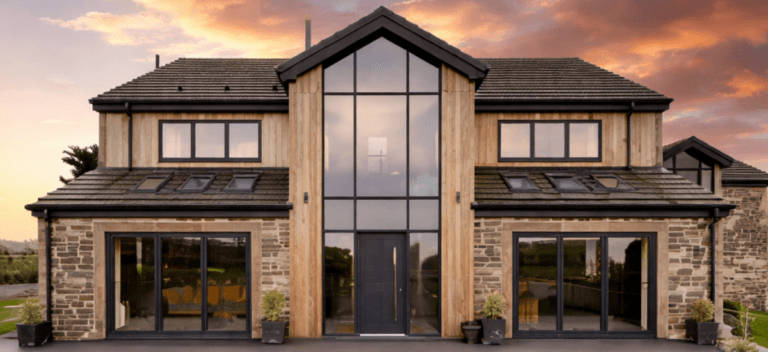
0.15 W/m²K U-value | Zero heating bills | ±1.5°C internal variation
A completed home where performance is measured in real use, not predicted.
- U-value of 0.15 W/m²K with no additional insulation
- Zero heating bills, with energy being exported back to the grid
- Internal temperature variation of just ±1.5°C year-round
This is what fabric-first looks like once occupied — stable, efficient, and comfortable to live in. Stotfold Crest Stables >
Self-build delivery — Hampsthwaite
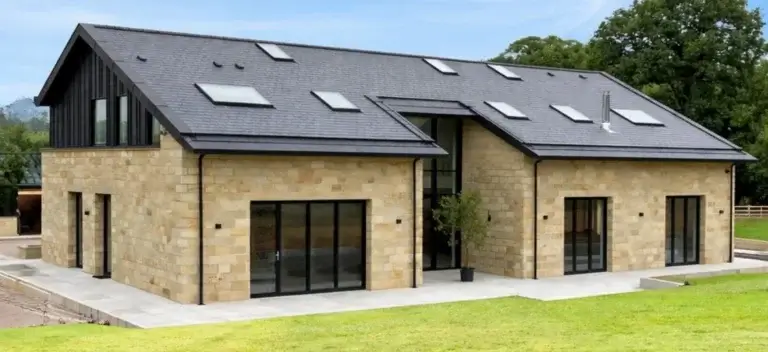
4-week superstructure | ~0.15 W/m²K U-value | Predictable programme
A project where buildability and programme certainty were just as important as performance.
- Full SIP superstructure delivered in just 4 weeks
- U-values of ~0.15 W/m²K achieved through the fabric
- Clear sequencing and reduced on-site coordination
With fewer interfaces and a defined system, the programme stayed predictable from the outset. Hampsthwaite Self Build >
Residential development — Surrey
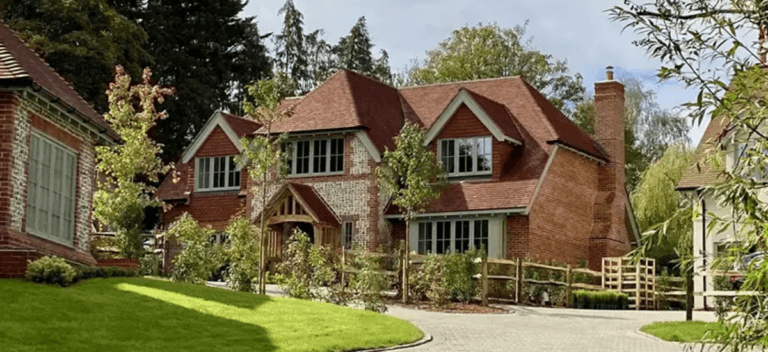
Multi-plot delivery | Repeatable system | Consistent performance
A multi-plot scheme where consistency across units matters as much as speed.
- Repeatable system across multiple homes
- Predictable programme for each plot
- Consistent thermal performance throughout
For developers, this is where risk reduces — when each plot follows the same logic, and delivery becomes repeatable. Surrey Residential Development >
Education — Oldfield School STEM Facility
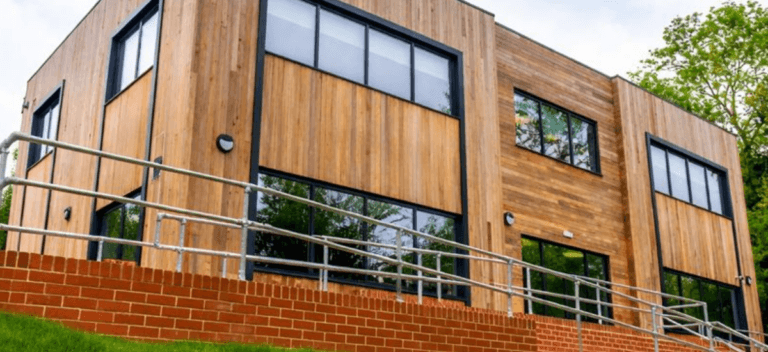
~8-week installation | Live school environment | Low disruption build
Delivered in a live school environment where time and disruption were critical.
- Superstructure completed in ~8 weeks
- Fast, controlled installation through offsite manufacture
- High-performance envelope built in from day one
The result: a modern teaching facility delivered efficiently, without prolonged site disruption. Oldfield School >
What these projects demonstrate
Across self-build, education and residential development, the outcomes are consistent:
- Faster superstructure build times
- Predictable sequencing on site
- Reduced coordination risk between trades
- Low U-values achieved through the fabric
- Buildings that perform as expected once in use
In short:
more control during the build, and more certainty once the building is occupied.
What we’ve maintained this quarter
Alongside project delivery, we’ve successfully passed our annual assessments, maintaining the standards that underpin how we deliver on site:
- STA Assure accreditation (maintained)
- CHAS certification (renewed)
- SMAS certification (renewed)
- ISO standards (annual assessments passed)
- STA Assure Gold (annual assessments passed)
We continue to use BBA-certified SIP panels, supplied through our strategic partner, SIP Building Systems (SBS).
This isn’t about ticking boxes — it’s about ensuring consistent, verified performance across every project.

Support when you need it
We’ve also expanded how projects can access support:
- Out-of-hours chat facility now live
- SIP Build Knowledge Hub for quick answers
👉 https://kb.sipbuilduk.co.uk/sipbuilduk.co.uk/help - SIPs Explained for in-depth technical guidance
👉 https://sipbuilduk.co.uk/sips-explained/
Planning a project?
Got architectural plans ready? Upload them here:
👉 https://sipbuilduk.co.uk/contact-us/
Or tell us about your project:
👉 Complete a project focus form online
Final thought
The value of a SIP system isn’t just in how quickly a structure goes up. It’s in how that building performs once it’s complete — That’s what these projects demonstrate. |
Best regards, |